

How Clothes Shape Who You Become
Style as personal architecture that can rewrite self-image.

The connection between how we perceive ourselves and how we present ourselves is like a dialogue. The influence flows in both directions. One shapes the other.
It’s easier and more convenient to grasp that we influence our own way of showing up than the other way around because we like to think that we have a high level of personal agency: “I choose my clothes, so yeah, I’m the one who’s driving.”
Aside: Self-image, the story you tell yourself you are, cannot not reveal itself in the way you show up… I.e., our vocal tone and volume, word choice, our micro-expressions, posture, and style of dress are all going to be downstream from how we see ourselves. “I’m prepared to give the pitch,” “I’m too old to approach her,” “I’m not senior enough to question the boss.”
Much of it, yes, is conscious; we do have override power if we choose to use it. But much of it, not. Most decisions, including clothing choices, are made automatically without deliberation or internal consultation, based mostly on social copying and habit — i.e. what others in the group are doing and what we’ve done before. This explains why the clothes in your closet are… the clothes in your closet.
But what I’m more interested in, and what I want to get further into here, is the reverse: the influence of our clothing on our identity/self-perception/self-image. I want to go deeper than merely acknowledging “enclothed cognition,” (subjects in a study felt more important wearing lab coat while being told it was a doctor’s coat than when they were told it was a painter’s coat).
I want to get at alignment. Finding clothes that vibe with and reinforce self-image.
Stayin’ Alive
I bought a pair of vintage flares three years ago. Wearing them out the first time required a mental leap because the cut felt completely different from what I had been wearing and also different from what guys my age are wearing here in Vancouver, which, to this day, admittedly with more exceptions now, remains low-rise, slim-fit.
I hadn’t worn flares since I was a kid in the ’70s. In 2023, the refined look was gurkha trousers: higher rise, pleats and tapering to the ankle. Gen-Z were wearing boxy, wide, cropped pants. You just didn’t see flares outside of IG. Not in the field, at least not worn by men. But I’ve always liked flares. Roger Moore’s 007, Bowie, Redford, Biasini. To me they look cool.
The shape feel elegant and natural and are objectively flattering. So instead of just sitting on the sidelines, I went for it, put them on and went out for coffee.
I quite literally had Stayin’ Alive playing in my head.
I’ll be transparent. I did feel some social risk. I was very conscious of the fact that I was doing something different. Not as different as the dude who walks around here LARPing as medieval villager. But for the first couple of blocks, I was certainly keenly aware that I had left the norm.
But then you quickly realize that nobody gives a damn. You get a glance here and there, but everyone’s too wrapped up in their own head to even think about your pants.
So, what happens? After a short time, you adjust. An equilibrium sets in. A plateau. You develop a comfort with them. Then you wear them again. And you buy another pair of flares. And another.
Now, and as has been for a few years, flares are the only cut of pants I wear. They feel totally normal for me at this point. I’d feel awkward wearing a different cut.
This is a micro example.
The ever-absorbing mind reads inputs from what’s happening on the outside of the capsule and reports back to the mothership. ‘Flares again.’ ‘Oh, so I’m flares guy.’
The clothes and the man engage in a working dialogue.
The external toggles something internal.
Accrual. Daily repetition adds another layer.
The clothes we wear every day compound the self-messaging.
Take the daily fleece vest guy. He becomes fleece vest guy. That’s who he is. The fleece vest’s connotations of comfort, generic conformity, softness, harmlessness are so dominant that he absorbs those dimensions and carries them into every situation. He embodies them. With every passing day it becomes harder for him to become anything other than fleece vest guy, because the garment’s accrued apathy layers on thicker and thicker. The identity gets torqued down bit by bit. (That’s a dark spiral.)
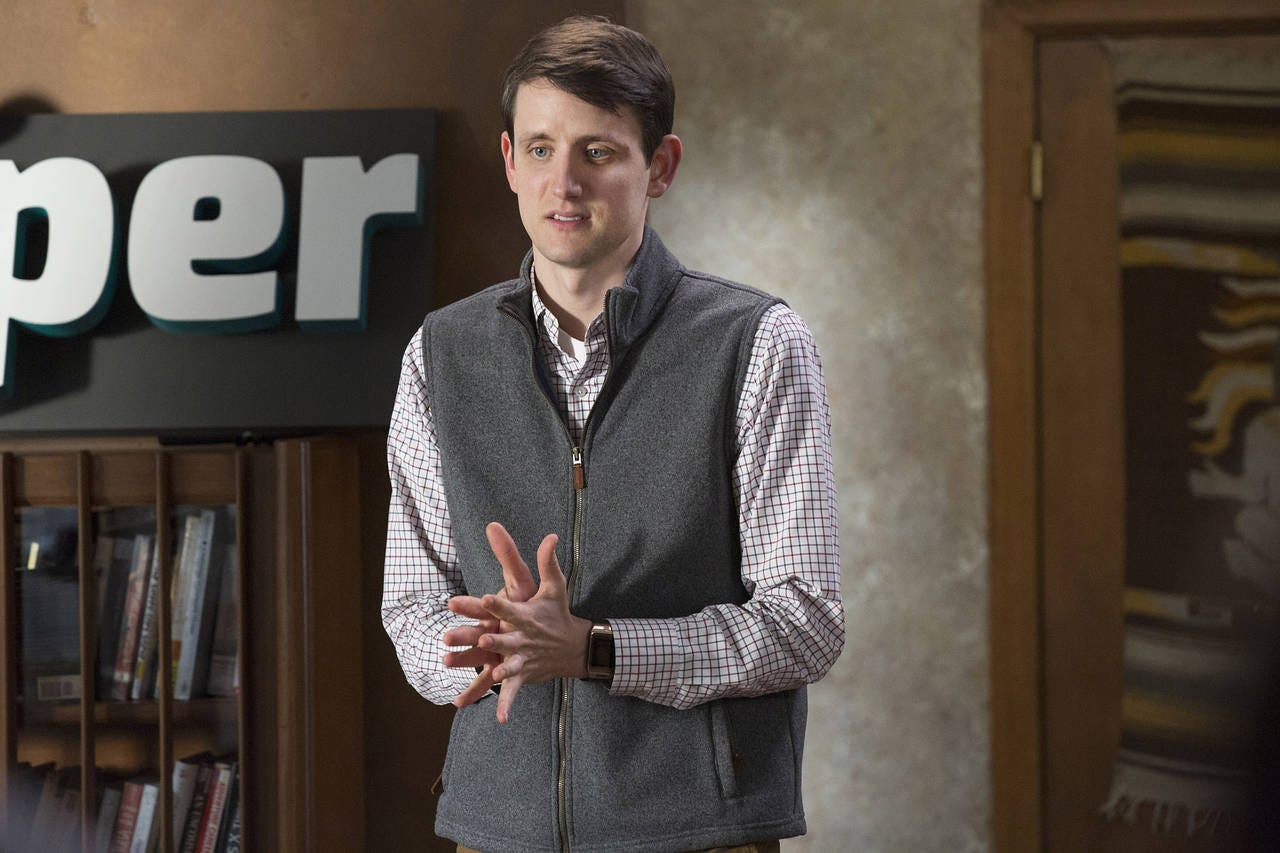
That’s why we have to be careful what we wear. But! The same compounding force can run in the opposite direction, as it has with my flares example.
The message here is not about ‘How to get dates.’
Obviously, I advocate for dressing with style. But there’s a distinction to be made here. It’s not “dress well to get treated better at restaurants” or “dress well to get dates” or “dress well to advance your career.” This is not “how to score external rewards.”
I’m getting at the layer beneath all that. Down to who you think you are. Being real.
That’s why the actual challenge is to dress as oneself. It’s about alignment. People will always have something to say about what men should be wearing. There’s no shortage of snark, arrogance and sniping online. Spats about clothes, flexing. Rabbit-hole diving. But that’s all external. It’s chasing.
So what we do here is not “buy Cucinelli,” or “wide fits are trending,” or “you need to find Gere’s vintage polo coat from American Gigolo,” or “wear flares like I do.”
I know you’re not going to wear flares.
This is more in the spirit of encouraging you to consider leaning into pieces and looks and connotations that you like and love.
Second Skin.
Clothing functions as personal architecture. Think of clothes as a place you inhabit, a second skin you function within. We’re sponges for connotation, subconsciously. The aesthetics of our physical environment play heavily on us. Obvious, again. But I think we forget this because we’re so accustomed to, and now become numb to, the bland and the generic in our environment: sterile offices with fluorescent lights in T-bar ceilings, Costco, unexpressive cars, background condo and office buildings.
Clothing is so much more intimate than the physical environment of a room or a street. So much closer, so interrelated to us. Attached to the body, moving with us. So any connotations of the clothes are automatically perceived as integrated with the individual. It would never occur to an observer to read the vibe of the clothes as something separate from the energy of the wearer. But this applies to when we’re both the observer and the observed.
Meaning the clothing we wear, especially what we wear regularly, are speaking to us, about us. I’m the guy who wears XYZ.
This reminds me of one of my favourite scenes from “Three Days of the Condor.” Faye Dunaway tells Redford’s character:
"Sometimes I take a picture that isn't like me. But I took it, so it is like me. It has to be… I put those pictures away."
She’s telling him she sometimes produces work that doesn’t match the version of herself she wants to believe in, so she files them away, out of sight. The photos she hangs on her apartment wall represent the curated version she wants to project: Cool, detached, lonely, empty street, trees with no leaves. The photos she keeps hidden are the evidence she can’t quite square with her self-image.
I tried on a hoodie once. Looked in the mirror. It looked ridiculous. I’m a blazer guy. But if I wear the hoodie in public, do I become a guy who can wear a hoodie? What other possibility is there?
I didn’t buy it.
Personal style means the energy has to originate from the man rather than from borrowed references or expectations from the outside. It has to flow outward from the inside. I’m not saying it’s easy.
Most guys are stuck with uninspiring pieces in their closet. Probably safe. Conventional. A few repeats. And they have a ton of stuff they just don’t wear. For some, stepping out from this takes getting uncomfortable. It takes a certain escape velocity of courage to snap out of the comfort zone. Stay on your path.
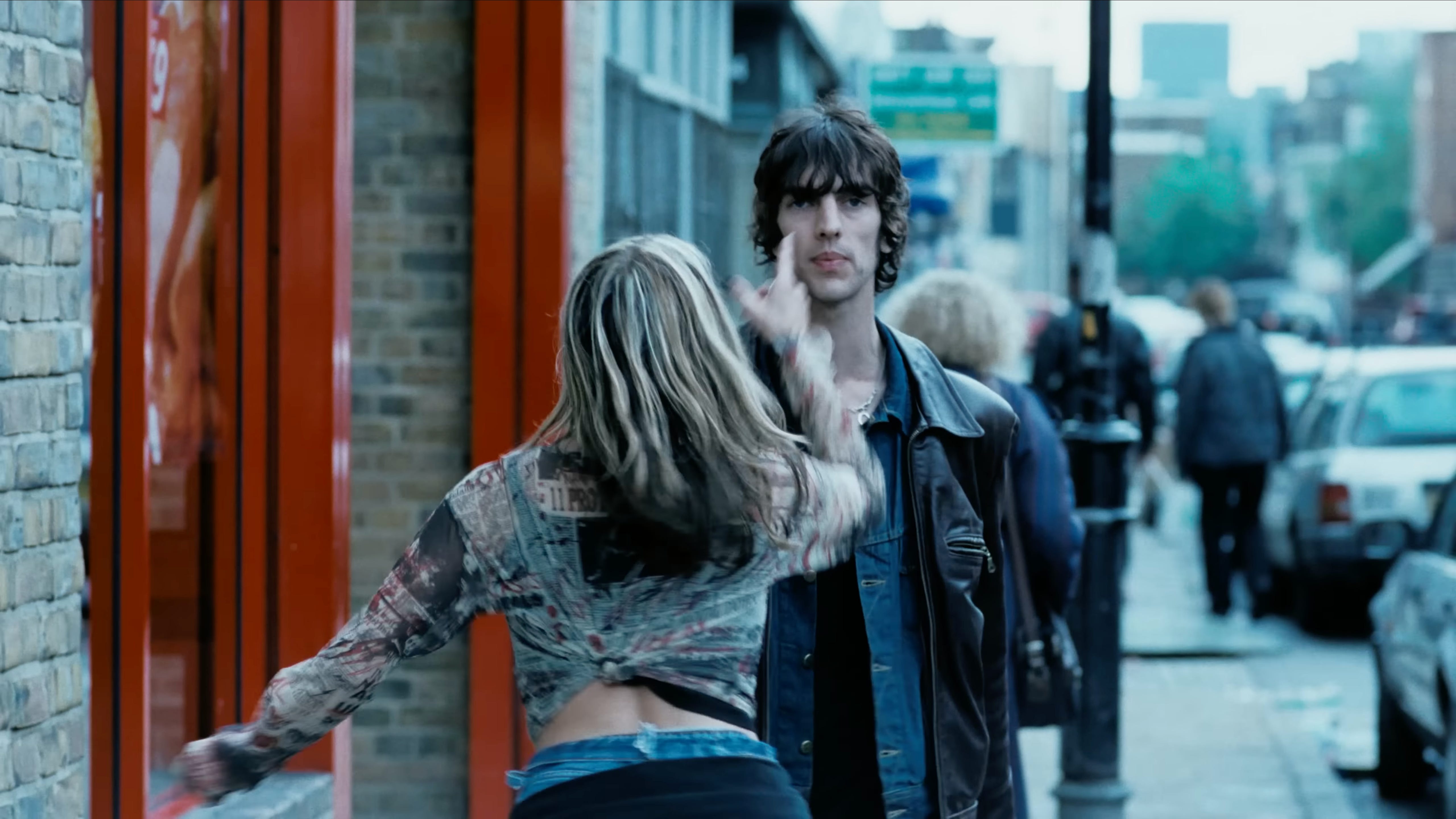
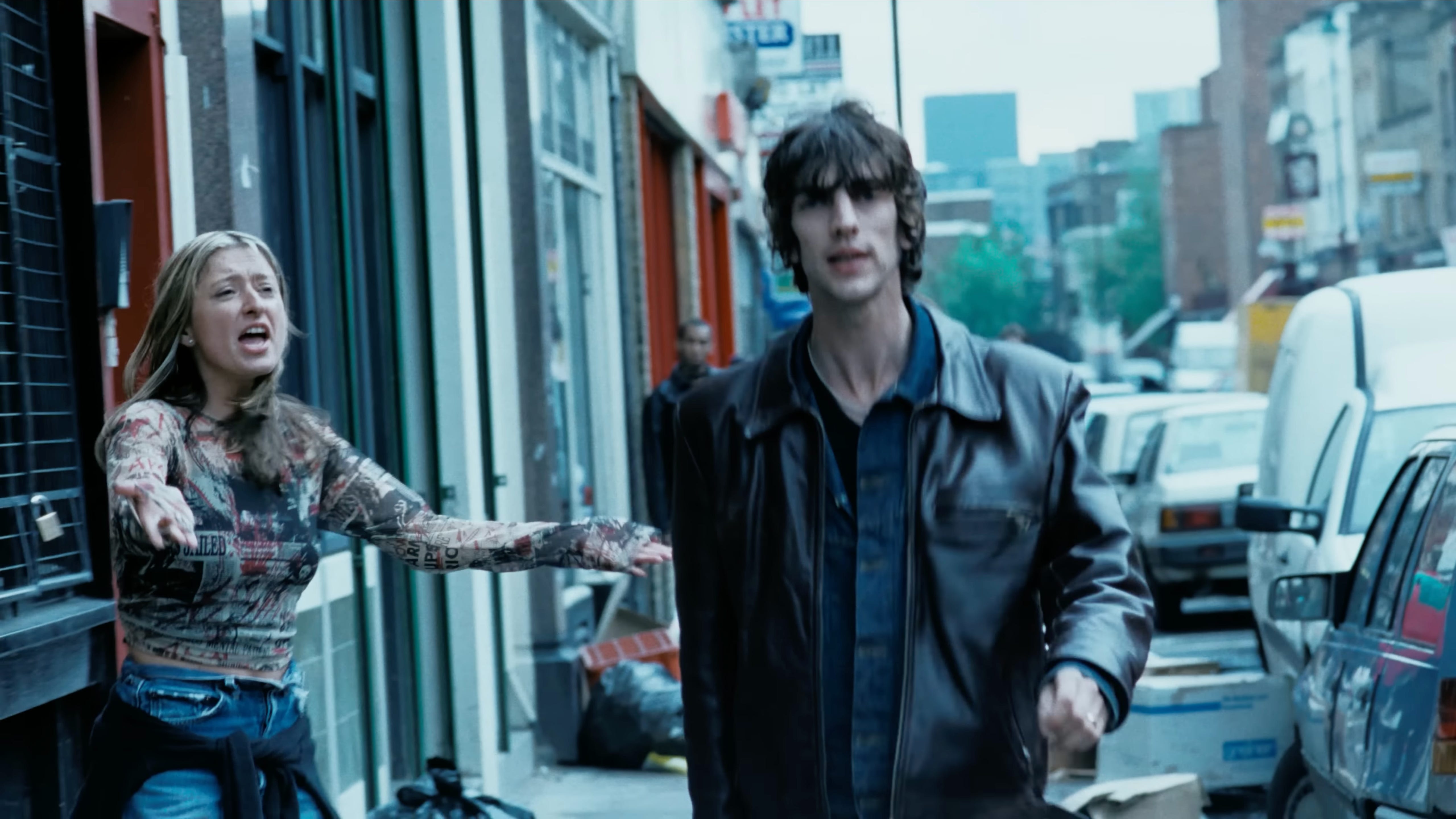
Connotations/ feel. Compare.
Consider the two spaces below.
They’re both houses. The first, loose, informal, organic, rough, and natural. The second, tight, precise, disciplined, serene, and spare.

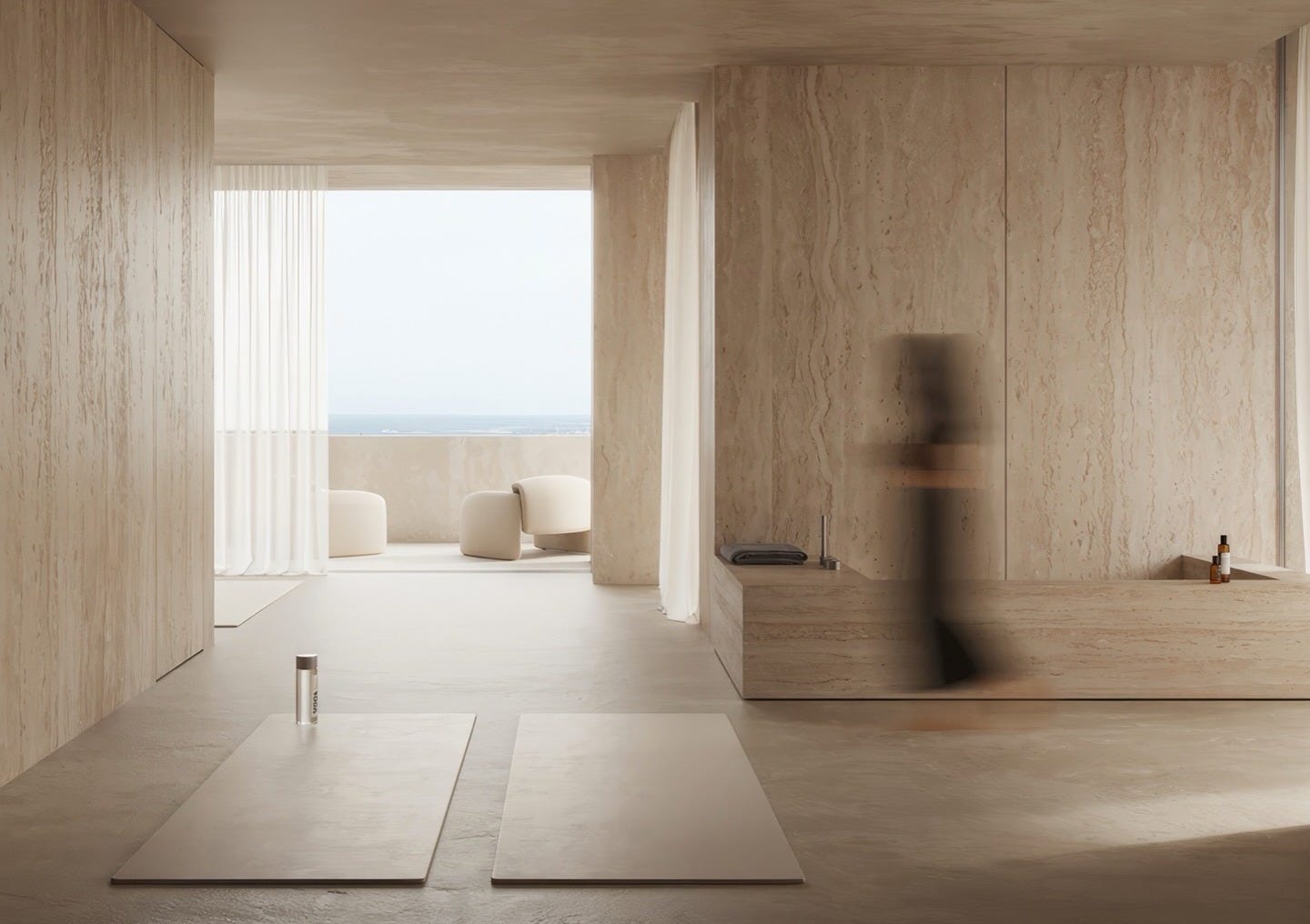
Which one would you be more likely to put your feet up on something in?
Which one would you rather have a loud, slightly stupid conversation in at 1 a.m.?
Which one would you be less careful about where you set your cold beer down?
Which one would you invite the guys over to watch the Super Bowl?
Which one would you rather leave a jacket or shoes by the door in without it looking wrong?
Which one would you be more okay with someone eating takeout straight from the container in?
Which one would you be less precious about someone moving a piece of furniture around in?
Which one would you rather step into after a long, overstimulating day?
Which one would you rather be in when you want zero visual noise or distraction?
The nature and quality — i.e. the connotations of — the space implies how one would behave in it.
What You’re Actually Saying?
Clothing carries qualities, dimensions, and meaning whether the wearer intends it or not. I feel I’m writing, “water is wet.” It’s obvious. The thing is, we don’t really think about it. Many don’t really actively think about their clothes at all… beyond looking generally like the other guys at work. Or we just end up at stores we’ve shopped from before.
And I don’t think we think about how the clothes we wear imply how we would “be” in them.
I see personal style as a process of mapping the associated meanings and qualities of clothing onto the persona.
Back to the flares: I like the kick at the hem when I walk. The sway in the fabric implies ease and comfort with flow and forward motion. There’s a glide. I’m claiming space. And the shape is grounding. I’m meeting the ground with purpose, not visually floating a few inches above the sidewalk. I also love the socially forward, confident, refined sensuality of the ’70s expression. Flares are rare here for men, so they also communicate comfort doing something different; a bit of an outsider stance. That’s a set of emotional connotations.
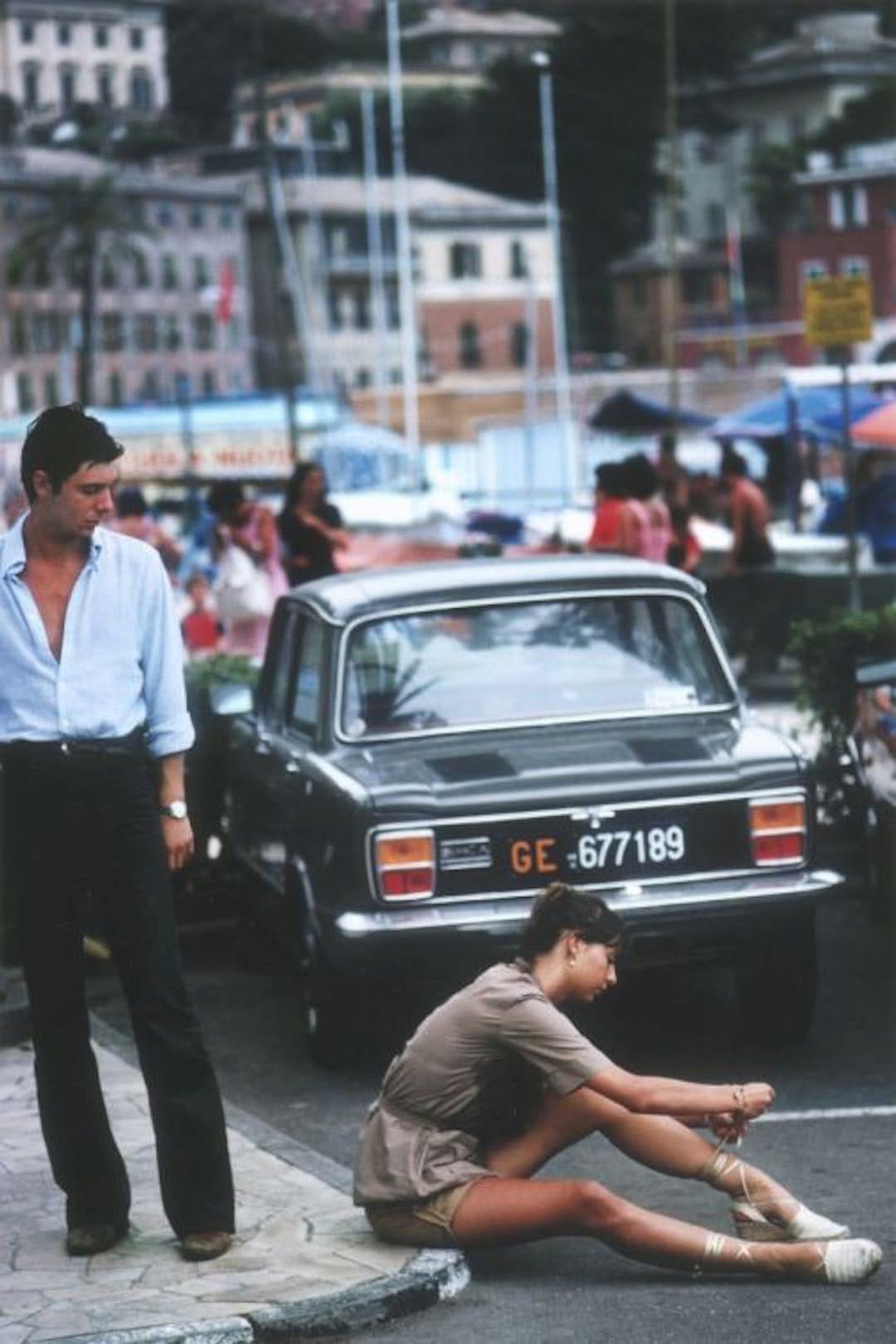
I could devote an entire post to the vibe of flares alone. But I’m post-rationalizing. In practice, I just love them and they suit me. Not complicated. I’m not getting caught up in garment details, studying the stitch density. I don’t know the construction details or fabric weight of any of my pants. Not one pair.
Don’t care. Because for me, energy comes first. Shape is going to do the heavy lifting. If the shapes’s not there, I don’t bother to look further. That’s how I approach it. It’s not right or wrong, but it’s my way. You’ll have yours.
The standard at work here stays internal. It’s not external validation though brand or trend alignment, or level of quality. It’s not “well, it’s Loro Piana, therefore defensible and cool.” It’s not even got to do with aligning with any fashion movement, or “the style guys are wearing such & such these days.”
It’s just you and the clothes. Ideally there’s soul-alignment.
Can clothes be used for self-definition? I say so.
We all speak the same language. Shirts, pants, shoes, jackets. We have to. What are you using the language to say?
P.S.
Want to read some of my other posts on style?
How We Move in Clothes: About the flow of Roy Scheider’s & Daniel Biasinis’ 1970s suits.
Can You Feel It?: About zooming in on aspects that you care about.
To Look Like the Jungle Cat: How clothes embody a certain psychological posture.
Subscribe to Parce que
X-ray on the human OS. Style as an extension of psychological posture. 1970s tailoring.
If you know of someone who might like this post, please let them know about it: